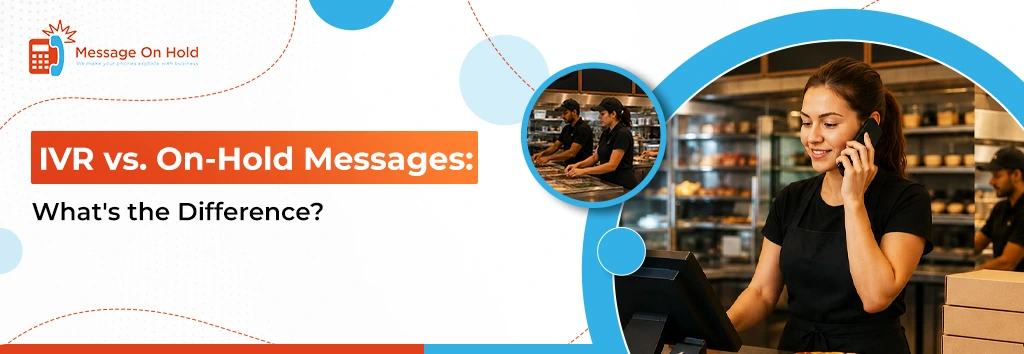
Imagine a chaotic Friday night inside your bustling pizza shop. The phone rings constantly while your counter staff scrambles to serve your hungry and restless customers. Your callers hear endless ringing, a confusing robotic menu, or worse—complete silence while waiting on hold.
They quickly lose patience and dial a competitor instead. You just lost another valuable order because your communication setup failed them.
It happens more than most restaurant owners realize. A big part of the problem is that two essential phone tools – the IVR system (Interactive Voice Response) and on-hold messages – often get confused with each other. Sometimes, they get lumped together as ‘the phone system.’
However, they are not the same thing. They serve different purposes, activate at different moments in the caller’s journey, and solve entirely different problems.
You need clarity on these technologies before spending money on a new telephone answering system. This comprehensive guide will resolve the ongoing debate between IVR vs. On-Hold Messages.
We will explain their distinct differences, identify when each tool works best, and help you determine whether your restaurant needs one or both. By the end, you will confidently create caller experiences that reduce hang-ups and convert calls into loyal customers.
IVR vs. On-Hold Messages: At A Glance
| Feature | IVR System | On-Hold Messages |
| Purpose | Routes callers to the right department or action | Engages callers while they wait on hold |
| When callers hear it | Immediately when the call connects | After being placed on hold by a staff member |
| Customer interaction | Active – caller presses keys or speaks commands | Passive – caller listens while waiting |
| Business benefits | Reduces misdirected calls and staff interruptions | Lowers hang-ups and reinforces brand messaging |
| User experience | Functional but impersonal if poorly configured | Warm and brand-consistent when done well |
| Revenue impact | Prevents lost orders through faster call routing | Drives upsells and promotes offers during wait time |
| Best use cases | Multi-location chains, high call volume, complex menus | Any restaurant where callers are regularly placed on hold |
Why Do Restaurants Confuse IVR and On-Hold Messages?
The confusion is understandable. Both tools live inside your phone system, both involve recorded audio, and vendors often sell them together. That overlap makes it easy to assume they do the same job. But they don’t, and mixing them up leads to poorly configured phone setups that frustrate callers.
- Both involve recorded audio
Restaurant owners hear ‘recorded voice’ and assume IVR and on-hold content are the same format. They are not! One is interactive, and the other is passive, which changes everything about how they are written and deployed.
- Vendors bundle them together
Many VoIP phone system providers sell IVR and on-hold messaging as a single package. When features arrive together, operators assume they function as one unified tool rather than two distinct caller experiences.
- Phone systems aren’t a priority until something breaks
Most restaurant owners don’t think critically about phone setup until complaints roll in. By then, the confusion between systems has already cost them customers and revenue they can’t trace back to a single cause.
- Terminology gets used interchangeably in sales conversations
Sales representatives sometimes use ‘automated phone system, ‘telephone answering system,’ and ‘on-hold solution’ to mean different things. Without clear definitions, you may walk away with the wrong mental model.
- Both feel like ‘the hold experience’
Callers encounter both tools in the same general window – waiting or being directed. That proximity in the customer journey makes restaurant owners feel they are the same phase of a call. Nonetheless, they actually occur at completely separate trigger points.
What Is an IVR System, and How Does It Help Your Restaurant?
An IVR system is an automated phone technology that greets callers when they first connect. It guides them toward the right destination. Callers have to press 1 to place an order, press 2 for reservations, or press 3 for hours and directions.
More advanced systems respond to spoken commands rather than keypad input. The goal is to route calls intelligently so the right person or team handles each request. It doesn’t tie up staff on calls they are not equipped to manage.
How Does It Help Your Restaurant?
- Eliminates misdirected calls
When every call lands with the right team member from the start, your staff spend less time transferring calls. They can actually focus more on serving customers. A well-built IVR reduces internal friction on every single shift.
- Handles high call volume during peak hours
A properly configured virtual receptionist setup transfers multiple callers simultaneously. Nobody gets a busy signal or waits endlessly for someone to pick up.
- Gives after-hours callers useful options
Rather than sending customers to a dead voicemail, an IVR can offer hours, address information, or an option to leave a specific type of message. It keeps the experience functional even when your doors are closed.
- Reduces unnecessary interruptions to kitchen and floor staff
When callers self-select their destination through the IVR, your team members can focus on what they are doing. They don’t have to answer a phone call that should have gone to the manager or delivery coordinator.
What Are On-Hold Messages, and How Do They Help Your Restaurant?
On-hold messages are professionally produced audio that plays while a caller waits on hold. Unlike IVR, there is no interaction. The caller listens while the message does the work.
Done well, phone hold messages fill the silence with brand personality, useful information, and subtle promotion. They transform an annoying wait into a branded touchpoint. It reduces hang-ups and occasionally drives additional sales before anyone picks up the line.
How Does It Help Your Restaurant?
- Reduce hang-up rates significantly
Research consistently shows callers who hear engaging content while on hold wait longer before disconnecting. Silence or a generic hold tone signals neglect. Relevant, well-produced audio signals that their call matters.
- Promote specials and drive upsells passively
Custom on-hold messaging services are one of the few advertising channels where you have a captive, already-interested audience. Mentioning a weekend special or a new menu addition to someone already calling to order is highly effective. It costs nothing extra per impression.
- Reinforce brand voice and trust
A consistent tone in your phone system recordings matching your restaurant’s personality builds familiarity. Callers who hear a polished, professional hold experience perceive your brand as more credible and organized.
- Provide genuinely useful information
Professional phone greetings and hold content can answer questions callers were going to ask anyway. This may include parking directions, allergy policy, online ordering reminders, and event bookings. It shortens call times and frees staff attention.
IVR vs. On-Hold Messages: Key Differences Every Restaurant Owner Should Know
Instead of patching one problem with the wrong solution, understanding where IVR vs. on-hold messages differ helps you deploy each tool correctly. The distinction comes down to timing, interaction, and intent.
IVR works at the moment of connection by routing the caller before anyone picks up. On-hold messages work after answering a call and placing the caller in a queue. Both shape the caller experience, but they do it at completely different stages.
Let’s check out:
- Purpose
An IVR system routes callers to the right destination the moment they connect. It acts as a digital traffic controller. The technology directs order calls, reservation requests, and general inquiries before any staff member picks up the phone.
On-hold messages serve a completely different purpose. They fill the wait with brand voice, useful information, and subtle promotion. One moves callers forward while the other keeps them engaged while they stay in place.
- When Do Callers Hear It?
Callers hear the interactive voice response system the instant their call connects. Before a single staff member knows the phone rang, the IVR has already greeted them and presented their options.
Phone hold messages enter the picture much later in the call. A team member answers, determines the caller needs to wait, and puts them on hold. Only then does the on-hold audio begin playing for that customer.
- Customer Interaction
The automated phone system requires callers to actively participate in directing their own call. They listen to options, press a number or speak a command, and move through the routing flow based on their own input.
The benefits of on-hold messaging are that the content asks nothing from the caller at all. The customer listens passively, and the audio does all the work at the same time. That passive format is actually an advantage for your eatery. A captive, already-interested audience absorbs your message without any friction.
- Business Benefits
A well-configured telephone answering system with IVR reduces misdirected calls and staff interruptions. It also handles the chaos of a ringing phone during dinner service. Every call lands where it belongs from the very first second.
Custom on-hold messages deliver a quieter but equally real business benefit. They reduce hang-ups, promote your latest offers to callers already ready to spend. Moreover, it reinforces the professionalism of your brand at a moment most restaurants completely ignore.
- User Experience
The IVR experience feels functional if it’s correctly built and deeply frustrating when it isn’t. Short menus, clear language, and a live transfer determine who stays and who hangs up.
Professional phone greetings and hold content, on the other hand, shape the emotional tone of the wait. A caller sitting on hold with polished, relevant audio feels attended to. That same caller sitting in silence feels forgotten. And forgotten customers find somewhere else to order.
- Revenue Impact
The IVR vs. On-Hold Messages revenue argument plays out differently for each tool. IVR helps order calls reach your team quickly and efficiently. It reduces unnecessary transfers that often cause callers to hang up.
An on-hold system generates revenue from calls already in progress. A customer waiting on hold is a warm audience. Sharing limited-time specials or a new menu item with callers already planning to order increases opportunities for additional sales.
- Best Use Cases
A VoIP phone system with IVR built in works best for restaurants managing high call volume. Simultaneously, it’s effective for eateries serving multiple locations, or distinct departments that need clearly separated inbound lines. The more routing complexity you have, the more IVR earns its place.
On-hold phone system recordings benefit restaurants where callers regularly wait longer than 30 seconds before staff responds. Long hold times waste valuable opportunities to engage callers, promote offers, and strengthen customer confidence during every call.
- Cost
An automated call handler typically requires higher upfront technical software investment costs. You have to pay for underlying VoIP phone system user licenses and advanced setup fees.
Conversely, professional hold audio carries much lower initial setup expenses. You primarily pay for studio voiceover production and occasional script updates. It delivers an extremely affordable recurring marketing tool for growth.
Should Restaurants Choose IVR or On-Hold Messages?
The honest answer is that most restaurants eventually need both. Nevertheless, that doesn’t mean both make sense on day one. Your current call volume, staff capacity, and caller pain points should drive the decision.
If callers are reaching the wrong person or hitting dead ends, start with IVR. If callers are hanging up during hold, start with on-hold messaging. The entry point depends on where your phone experience is breaking down right now.
When Should Your Restaurant Choose IVR?
- High Call Volume: Use IVR when frequent misdirected calls slow service and frustrate both staff and callers.
- Multiple Locations: Deploy this as callers need quick routing to the correct restaurant location every time.
- After-Hours Calls: Implement IVR when after-hours callers need useful information instead of voicemail alone.
- Dedicated Departments: Use this to separate how teams handle orders, reservations, catering, or customer support efficiently.
- Frequent Transfers: IVR is effective when repeated call transfers create frustration and hurt customer satisfaction.
When Should Your Restaurant Choose On-Hold Messages?
- Long Hold Times: Opt for on-hold messages when callers regularly wait longer than staff can promptly respond.
- Silent Holds: On-hold messaging is a better option during silence or an unprofessional caller experience created by generic music.
- Promoting Offers: Consider this option to highlight seasonal menus, promotions, or loyalty rewards during wait times.
- Consistent Branding: Incorporate this when your brand voice disappears once callers are placed on hold.
- Brand Refresh: Use hold recordings after rebranding to reinforce your updated identity with every caller interaction.
Best Practices for Creating a Better Caller Experience
You must implement these powerful communication tools correctly to avoid frustrating your hungry customers. Follow these proven best practices to maximize the effectiveness of your custom hold messages and interactive voice messages:
- Keep Your Interactive Menus Incredibly Short
Respect your caller’s valuable time by offering fewer than four menu options. Hungry customers quickly lose their patience if they must listen to a long list of irrelevant department choices.
- Avoid Building Excessive Phone Menu Layers
Never force a customer to navigate through three different menus just to order food. Keep the routing structure perfectly flat so callers reach your staff in two steps or less.
- Update Your Promotional Audio Content Regularly
You cannot play the exact same holiday promotional message in the middle of July. Refresh your phone system recordings frequently to highlight your current seasonal specials and active menu items.
- Use Professional Studio Voiceover Recordings Exclusively
You should never let a random employee record your official business greetings using a cheap microphone. Professional voice actors provide a polished, clear, and authoritative tone that builds immediate trust with your customers.
- Monitor Caller Feedback and System Performance
It’s crucial toconsistently review your analytics to see where callers abandon the line. Adjust your menu options or shorten your hold audio if data shows customers regularly hanging up before placing an order.
FAQs
1. Can a restaurant use IVR and on-hold messages together?
Yes, you can absolutely use both systems seamlessly together. Your interactive menu initially routes the caller, and your on-hold messages engage them if your staff cannot answer immediately.
2. Does IVR reduce missed restaurant calls?
Yes, absolutely! This technology instantly answers every single call automatically. You can significantly reduce missed opportunities. It’s because the system actively handles multiple incoming lines during your busiest and most chaotic dinner rushes.
3. Do on-hold messages improve customer satisfaction?
Of course! Professional audio greatly reduces the perceived waiting time for callers. Customers feel far less frustrated when they hear entertaining music and relevant information instead of endless, empty dead air.
4. How long should restaurant on-hold messages be?
You should aim for audio loops that run between 2 and 4 minutes. This specific length provides enough variety so that customers never hear the same promotional message repeat twice.
5. Which is better for small restaurants: IVR or on-hold messaging?
For smaller restaurants with lower call volume, on-hold messages typically deliver faster ROI. They are simple to implement and immediately improve the hold experience.
IVR becomes more valuable as call volume grows and routing complexity increases. Start with the tool that fixes your biggest current caller pain point.
Build a Phone Experience That Wins Customers Before Anyone Picks Up
IVR and custom on-hold messages serve entirely different operational purposes. Neither powerful technology replaces the other in your daily operations. Together, they can dramatically improve your overall customer experience and boost your internal operational efficiency.
You must carefully evaluate your current phone communication strategy to identify where you lose valuable orders.
Message On Hold has been helping restaurants build better caller experiences for over 30 years. We deliver professionally produced on-hold marketing content alongside a full VoIP phone system for restaurants that includes built-in IVR capability—specifically for how restaurants operate.
Your busy restaurant deserves a reliable communication backbone that actively drives growth. If your phone setup isn’t working as hard as the rest of your team, it’s worth a conversation.
Contact Message On Hold today to start your free trial and transform your phones into your most profitable asset.