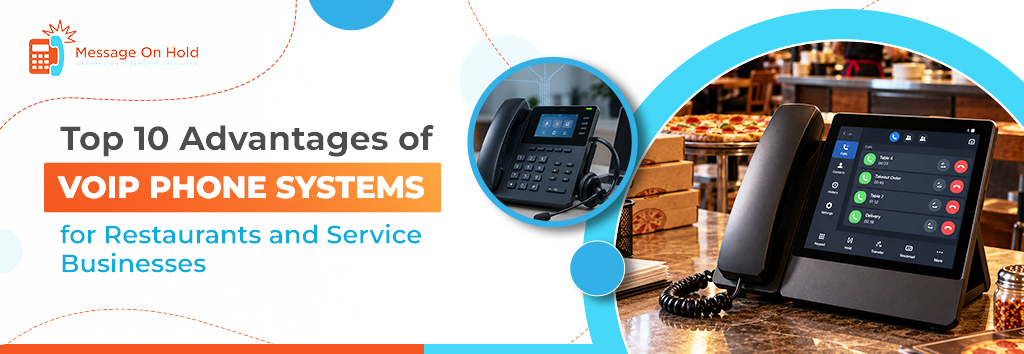
Switching to a Voice over Internet Protocol (VoIP) phone system solves the chaos of your busiest restaurant shifts by keeping lines clear, lowering costs, and ensuring you never miss a hungry customer.
A Friday dinner rush creates a messed-up scenario. Your phones ring together, customers wait, and staff juggle orders across the counter. You need every call handled quickly, because one missed order can send a hungry customer elsewhere.
Traditional phone lines may create frustrating busy signals during these rushes. Conversely, separate, disconnected store systems leave your staff guessing. Internet-based VoIP phone service gives your team the breathing room they need to handle hectic periods. A phone system offers high flexibility, lower costs, and better customer service for restaurants and service businesses.
To help you streamline your operations, we have broken down the top 10 advantages of VoIP phone systems for fast casual restaurants and service businesses below. Let’s look at how this technology saves time and boosts your bottom line.
Quick Answer
VoIP phone systems help restaurants handle rush hour calls, reduce missed orders, lower phone costs, and improve customer service through queues, call routing, outage backup, POS integration, and hold messaging.
Why Do Traditional Landlines Fail During Restaurant Peak Hours?
Traditional landlines often struggle during restaurant rushes because each line handles one call. As demand rises, customers hear busy tones or lose connections. Your staff then faces more interruptions, missed orders, and lost sales during service.
Here’s why traditional landlines fail miserably during rush hours:
1. Limited Line Capacity (The “Busy Signal” Bottleneck): A landline supports only the number of physical lines you install. Three lines mean three active calls. During a Friday rush, the fourth caller hears a busy tone, hangs up, and may order elsewhere instead.
2. Lack of Automated Call Queuing: Traditional lines cannot place extra callers into a useful queue automatically. Your customers hear silence, repeated beeps, or busy tones. Many also hang up after one attempt, especially during a quick service rush, and choose another restaurant.
3. Hardware Vulnerability to Kitchen Elements: Restaurant kitchens expose phone hardware to heat, grease, moisture, and dust. Those conditions can damage handsets, buttons, wiring, and connections. This creates audio problems or equipment failures during your busiest shifts.
- Flour dust can settle inside buttons, receiver hooks, and small openings. In a pizzeria, that buildup may make buttons stick or stop responding. Your staff will end up with a phone that fails during a rush.
- Heat, grease, and humidity wear down wiring and handset parts over time. You may hear static, muffled voices, or sudden silence. The worst part is that repairs may arrive at the worst possible moment, during a crowded service period.
4. Zero Redundancy and Disaster Recovery: A damaged cable can take your entire phone system offline. Storms, construction, or provider outages may stop incoming orders. Traditional lines also lack automatic rerouting. Therefore, customers cannot reach your mobile team or another store.
5. Inability to Handle Simultaneous Internal & External Traffic: Your staff uses phones for orders, driver updates, address checks, and manager calls. A traditional system ties each task to the same limited lines, making it impossible to manage both internal and external traffic simultaneously.
How VoIP Systems Can Help During Restaurant Peak Times?
A VoIP phone system helps you handle restaurant rushes with internet-based calling. It supports more callers, routes questions quickly, and keeps staff connected during outages. You can take orders faster and reduce pressure at the counter.
Below is how VoIP solves the top peak-hour bottlenecks for QSRs and pizzerias:
- Unlimited Call Capacity: Business VoIP lets your restaurant handle many calls through one number. Customers can wait in line instead of hearing a busy tone. Your team can finish orders in sequence and keep more Friday night calls from getting lost.
- Automated Call Queuing & IVR: VoIP for business can answer routine calls automatically through queues and menus. Callers will hear hold music, learn about specials, or choose an option for new orders. Your front counter team spends less time repeating basic information.
- Smart Redundancy & Failover: Some systems feature cloud calling that gives you backup options during outages. Calls can move through cellular service or reach staff mobile phones, another store, or a remote order team. Your customers can still place orders during local problems.
- Direct POS Integration: A reliable VoIP offers practical POS integration that shows caller details and past orders as the phone rings. Your staff can confirm delivery information faster, enter orders with fewer keystrokes, and keep each customer moving through the line during busy periods.
- Mobile Flexibility for Drivers & Staff: Mobile apps integrated with VoIP phone service let drivers call from the restaurant number and keep personal numbers private. Kitchen staff can coordinate deliveries through separate channels. In this way, your internal calls do not block customers placing new orders.
What Are the Top 10 Advantages of VoIP for Fast, Casual QSRs and Pizzerias?
The biggest advantage of implementing VoIP for Fast Casual, QSRs, and pizzerias is maximizing order capacity and eliminating missed calls through automated call handling and cloud routing. You need a VoIP phone setup that keeps pace with lunch orders, dinner rushes, and busy pickup periods.
Learning the benefits of VoIP gives you and your restaurant team a practical way to protect orders, reduce delays, and serve customers consistently.
1. Lower Monthly Telecom Expenses
A cost-effective business phone system can lower your monthly telecom costs by replacing several dedicated lines. You pay for the service your restaurant needs, then add users through software.
You may also get low international calling rates, reduce phone bills, and track communication spending as your business grows each month.
2. Zero Busy Signals During Order Rushes
Virtual lines let several customers call at once, which allows your phone number to handle busy order periods. Extra callers wait in a clear queue instead of hearing a busy tone. Your team can finish one order, answer the next, and keep more hungry customers from calling a competitor during rushes.
3. Built-In Promotional On-Hold Messaging
Built-in VoIP on-hold messaging lets you play approved music and short promotions during hold time. Mention a dessert, side, or catering option that fits your menu. Callers can hear useful information instead of silence, and your staff gains another chance to increase each order during a busy shift.
During the hold period, you may also mention seasonal specials.
4. Centralized Multi-Location Management
A scalable multi-location restaurant phone system lets you update hours, greetings, and routing rules for several stores. You can change locations from one screen instead of visiting each shop. That saves management time, keeps information consistent, and reduces mistakes during holidays, promotions, or staffing changes.
Be able to manage busy periods with confidence.
5. Automatic Wireless Backup for Outages
Cellular backup in a VoIP system keeps your calls moving if broadband fails or power briefly drops. Your provider can route calls through a mobile network, so that customers can still reach your store. This backup helps you protect orders during local outages and short connection problems. It gives you another path for urgent customer calls.
6. Flexible Call Routing and Overflow Rules
With VoIP call routing, you can send unanswered calls flexibly to another store, a central order team, or office staff after a set number of rings. Customers will be able to reach another person instead of hearing endless ringing. This rule helps you capture orders during rushes, staff breaks, and unexpected call spikes.
7. Direct Integration with Restaurant POS Systems
POS integration can show a returning customer’s details and order history as the phone rings. Your staff spends less time searching for addresses or past orders. They can enter new requests faster, reduce typing mistakes, and keep the line moving during busy periods. That helps staff keep pace during busy periods.
8. Clear Data on Call Volumes and Missed Calls
Hourly VoIP call reports show the periods that bring the most phone demand. It becomes easier to schedule counter coverage and plan kitchen preparation around real call patterns. This information helps you place staff where customers need support during lunch, dinner, and local events. You can also match staffing to phone demand each day.
9. Fast Setup for New Store Openings
A new store can open faster with preconfigured phones and copied routing settings. You can repeat a proven setup, then adjust local hours, greetings, and staff access. An approach like this reduces setup work and gives your team a familiar phone process from opening day. This gives managers a repeatable opening process.
10. Automated Menus for Operating Hours and Pickup Details
Automated menus can answer common questions about hours, locations, pickup details, and parking. Customers get basic information quickly, and your counter staff can focus on guests inside.
You can also update menu prompts as store hours, pickup rules, or parking details change. It keeps routine questions away from counter staff.
VoIP Vs. PBX Vs. traditional phone system
VoIP, PBX, and traditional phone systems differ fundamentally in how they transmit voice signals, the physical infrastructure they require, and how they manage call routing. The table below highlights the key differences:
| Feature | Traditional Landlines (POTS) | On-Premise PBX | Cloud VoIP |
| How It Actually Works? | Runs calls through physical copper wires connected to the local telephone company. | Uses a physical switchboard box mounted on your wall to route calls between internal desk phones. | Converts your voice into digital data packets and routes calls entirely over your internet connection. |
| Hardware Required | Basic desk handsets plugged directly into physical wall jacks. | Bulky server closets, complex wiring blocks, and proprietary desk handsets. | An internet router and standard IP desk phones, computers, or mobile apps. No server closet. |
| Handling Call Surges | One call per physical line. When lines are full, callers hear an immediate busy signal. | Handles multiple internal extensions, but external calls are still capped by the physical lines plugged into the box. | Virtual line capacity scales instantly. Callers queue up or route to automated menus without hearing busy signals. |
| Cost & Maintenance | High monthly rental fees per physical line, expensive long-distance charges, and manual repair fees. | Significant upfront investment in hardware, plus ongoing fees to dispatch specialized telecom technicians for updates. | Low, predictable monthly subscription per user. No expensive maintenance visits or dedicated server upkeep. |
| Scalability | Slow and inconvenient. Adding a new line means waiting for a technician to run new copper wiring. | Difficult. Expanding extensions requires buying additional interface cards and rewiring the central unit. | Instant. You can add new users, phone numbers, or new store locations within minutes from a web dashboard. |
| Hold Messaging & Routing | Highly limited. You are usually stuck with silence, generic beeps, or crackly radio hookups. | Possible, but requires buying dedicated external audio players and manually loading sound files. | Built right in. Upload studio-recorded promotional audio, licensed music, and custom greetings straight to the cloud portal. |
| Outage Protection | Keeps working during local power cuts, but lines drop if storm weather damages street utility poles. | An on-site power or hardware failure knocks out the entire company phone network. | Automatic cellular failover or instant call redirection to staff mobile phones keeps calls flowing during internet outages. |
| Best Fit For | Single-room offices with minimal call traffic and zero interest in growth or digital features. | Large legacy corporate campuses with existing on-site IT teams willing to maintain physical telecom hardware. | Fast-paced restaurants, growing retail shops, and multi-location businesses that need reliable, flexible call handling. |
What Should You Check Before Choosing a VoIP Phone Provider?
Choosing the right VoIP provider can feel overwhelming. However, focusing on a few critical factors will save you a lot of headaches later. Before choosing a VoIP phone provider, you should evaluate network readiness, security standards, pricing transparency, core features, and service level agreements.
- Reliability and uptime: Look for a high uptime guarantee to avoid dropped client calls.
- Total setup costs: Check for hidden fees, hardware costs, and long-term contract requirements.
- Core feature set: Ensure they offer essential tools like auto-attendant, SMS, and call routing.
- Integration capabilities: Confirm the software connects smoothly with your existing CRM platforms.
- Customer support quality: Verify they provide 24/7 live assistance through phone or chat.
- Security and compliance: Check for strong data encryption and industry-specific regulations like HIPAA.
- Scalability options: Make sure it is easy to add new user lines as your business grows.
Upgrade Your Store Communications with Message On Hold
Outdated phone setups cost your business money every time a hungry caller encounters a busy signal. Moving to a modern VoIP setup protects your revenue during peak ordering hours. You can gain dependable line capacity, lower monthly expenses, and complete visibility across all your locations.
At Message On Hold, our team pairs reliable VoIP phone service with automatic cellular backup to prevent costly downtime. We also produce custom studio audio that promotes your high-margin menu items while guests wait. Get clear call routing, simplified billing, and dedicated support without buying expensive hardware.
Put our system to work during your busiest weekend shifts without any upfront financial commitment. Claim your 60-Day Risk-Free Trial today and hear the operational difference on your own phone lines.
Frequently Asked Questions
1. Can a VoIP phone work if the internet drops?
Yes. Your VoIP service can redirect calls through a cellular router or manager’s mobile phone if the internet fails. Customers can still reach your team, and staff can keep taking orders during the outage.
2. How does VoIP stop busy signals during a rush?
VoIP systems send incoming calls across virtual lines, queues, and menus. Callers can wait, hear store information, or reach another team member instead of hearing a busy tone. Your staff can keep taking orders as demand rises.
3.Can a restaurant keep its existing phone numbers?
Yes, you can usually keep your existing local number through carrier porting. Ask your provider to manage the transfer and confirm the timeline. Keep your current service active until the new system works properly.
4. Can you play promotional messages on hold with VoIP?
Yes. You can upload approved audio, schedule seasonal messages, and play licensed music during hold time. Use those recordings to promote specials or holiday offers. Update them as your menu, prices, or promotions change.
5. What Are The Disadvantages Of VoIP?
VoIP can depend on your internet connection. Hence, poor service may affect call quality. You may also face power or network outages. Choose a provider with cellular backup, call routing, and reliable support to keep customer calls moving during disruptions.
6. Which is better – VoIP vs. Landline?
VoIP usually fits busy restaurants and growing businesses better because it supports call queues, mobile routing, and multiple locations. Landlines can offer steady service, but they provide fewer features and often cost more to expand. What your restaurant needs- VoIP vs. a traditional phone system- depends on your internet stability, budget, scaling needs, and feature requirements.