Running a restaurant requires juggling food quality, guest service, and daily operations!
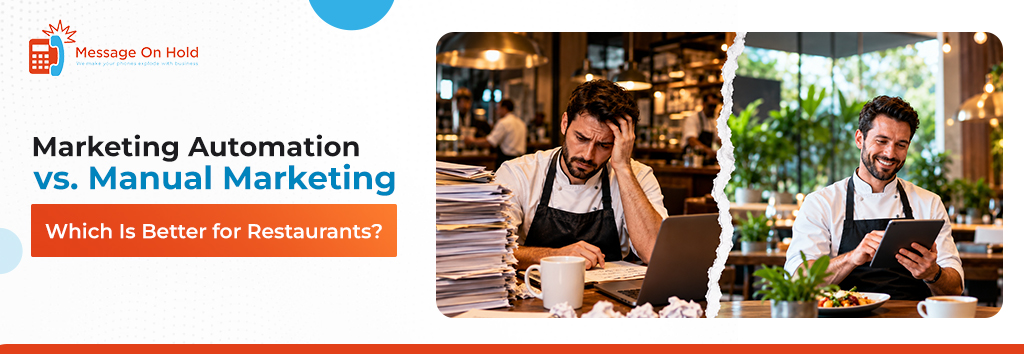
Because of this busy schedule, manual marketing costs a typical 30 to 45 hours per month. Even worse, it creates a “discipline tax” where a certain number of planned campaigns never actually get sent. Marketing automation, on the other hand, completely removes both the heavy time commitment and the discipline tax.
Instead of relying on someone to remember every customer interaction, automated workflows keep communication moving consistently. From loyalty rewards and promotional messages to review requests and reorder reminders, your restaurant can maintain engagement without adding another task to an already crowded shift.
But does automation really outperform manual marketing for every restaurant? The answer depends on your customer volume, marketing goals, available resources, and need for personalization. This guide compares both approaches across efficiency, consistency, personalization, scalability, and customer engagement to help you choose the right strategy.
Keep reading!
What This Guide Covers?
- How manual marketing works across everyday restaurant operations?
- What marketing automation can handle for growing restaurants?
- Key advantages and drawbacks of both marketing approaches?
- Marketing Automation vs. Manual Marketing – the core differences explained
- Which approach fits different restaurant marketing needs best?
- How restaurants can combine automation with human marketing?
- How Message On Hold supports restaurant marketing automation?
Marketing Automation vs. Manual Marketing: At A Glance
| Factor | Marketing Automation | Manual Marketing |
| Time | Saves staff time on recurring campaigns. | Requires hands-on campaign management. |
| Personalization | Targets customers using behavior and data. | Allows highly personal communication. |
| Consistency | Keeps campaigns running on schedule. | Depends on staff follow-through. |
| Scalability | Handles larger audiences efficiently. | Becomes harder as audiences grow. |
| Flexibility | Follows predefined triggers and workflows. | Allows quick changes when needed. |
| Engagement | Supports regular customer follow-ups. | Builds relationships through direct interaction. |
| Tracking | Makes campaign results easier to measure. | Requires more manual tracking. |
| Best For | Recurring campaigns and customer retention. | Local promotions and personal outreach. |
What Is Manual Marketing for Restaurants?
Manual marketing for restaurants is the practice of promoting a dining establishment through hands-on, non-automated tasks. These require direct human effort and physical or real-time presence.
This traditional approach builds real, personal connections with your local community. It requires physical effort and direct human interaction instead of digital software or paid algorithms.
Some Common Examples of Manual Marketing
- In-House Displays: Promoting daily specials through chalkboards, sandwich boards, and table tents featuring fresh offers.
- Direct Outreach: Distributing flyers, paper menus, and promotions while networking with nearby businesses and event organizers.
- Real-Time Social Media: Manually capturing photos, publishing updates, responding to comments, and sharing stories throughout each day.
- Personalized Guest Service: Teams gathering feedback, collecting contact details, and remembering special occasions through direct interactions with guests.
- Restaurant Marketing Tools: Managing each campaign, messaging, updating, and customer interaction.
What Is Marketing Automation for Restaurants?
Marketing automation for restaurants uses technology to manage repetitive customer communication without constant staff involvement. It can schedule promotions, trigger loyalty messages, request reviews, segment customers, and encourage repeat orders.
Restaurants can reduce the manual effort required to manage campaigns and also maintain consistent engagement at the same time:
Some Common Use Cases
- Email Campaigns: Sending automated welcome series, abandoned cart reminders, and nurture sequences.
- Social Media Management: Scheduling posts and tracking engagement across platforms.
- Audience Segmentation: Grouping customers by behavior, demographics, or purchase history to deliver targeted messaging.
- Loyalty Programs: Sending reward updates, special offers, and personalized incentives based on customer activity.
- Review Requests: Prompting customers to share feedback after dining experiences, helping restaurants generate consistent reviews.
- Birthday and Anniversary Offers: Sending personalized celebrations and incentives that strengthen relationships with returning restaurant customers.
- Customer Feedback: Collecting post-visit feedback through scheduled messages while identifying opportunities to improve guest experiences.
How Does Manual Marketing For Restaurants Work?
In restaurant business, manual marketing uses hands-on, offline, and traditional grassroots methods to attract and keep local diners. Below is how it works in detail:
- Direct Print Distribution: Restaurant staff distribute physical menus, door hangers, and flyers throughout nearby neighborhoods. These printed materials help restaurants reach local homes, offices, and busy foot-traffic areas.
- Compelling Incentives: Printed coupons, discounts, or freebies enable restaurants bring results and boost sales.
- Grassroots Community Engagement: Owners often create local awareness through neighborhood events, nearby partnerships, and tasting nights. Such personal involvement strengthens community relationships and builds familiarity around the restaurant.
- Word-of-Mouth Promotion: Employees encourage satisfied guests to recommend the restaurant to friends and family. Personal recommendations can strengthen local loyalty and can attract new customers through trusted relationships.
How Does Marketing Automation For Restaurants Work?
Automated restaurant marketing technology on the other hand uses software to send targeted, behavior-based messages like emails or text message. The sole objective is to reach guests automatically without manual effort.
Here’s how it works:
- Data Collection: The system collects guest information from your POS, online ordering platform, Wi-Fi, and reservation tools. These connected sources give restaurants a clearer view of customer activity and preferences.
- Behavior Triggers: Restaurants create rules that connect specific customer actions with predetermined responses. For example, an online order can trigger a thank-you message immediately after checkout.
- Audience Segmentation: The software organizes customers according to ordering habits, visit frequency, spending, or inactivity. Restaurants can then target frequent guests, high-value customers, or diners who stopped ordering.
- Campaign Personalization: Automated marketing for restaurants uses customer information to deliver messages that match individual behaviors and preferences. A frequent customer might receive a loyalty offer, while a lapsed diner could receive a return incentive.
- Automated Follow-Ups: Once a customer completes an order, the system can continue communication without staff intervention. Follow-ups can include review requests, reorder reminders, loyalty updates, or relevant promotional offers.
- Performance Tracking: Restaurants can also monitor campaign results, customer responses, and engagement across different marketing channels. These insights help teams identify which messages drive stronger engagement and repeat orders.
Where Marketing Automation Gives Restaurants the Biggest Advantage?
Marketing automation gives restaurants the biggest advantage in customer retention and repeat visits. These tools turn guest data into timely, personal messages without manual work. The biggest benefits of marketing automation for restaurants usually appear in efficiency, targeting, timing, and retention.
1. Saves Valuable Staff Time: Automation handles recurring campaigns quickly, freeing restaurant teams from repetitive marketing tasks during already demanding operating hours. Staff can focus more closely on guests daily.
2. Keeps Customer Communication Consistent: Through smart auto-reply, it’s possible to maintain consistent communication across customer touchpoints, even when staff remains busy. Restaurants can easily avoid missed follow-ups that can weaken customer relationships over time.
3. Improves Customer Targeting: Restaurants can segment customers by ordering patterns, visit frequency, spending, and inactivity. Targeted messages reach relevant diners instead of sending identical promotions broadly to everyone.
4. Delivers Timely Messages: Automated workflows trigger timely messages after specific customer actions, including orders, visits, or feedback. Such timing makes customer communication feel more relevant and useful consistently.
5. Supports Better Marketing Decisions: The systems support better customer segmentation including clearer campaign tracking, stronger follow-ups, and better customer retention. Performance data helps teams refine future campaigns in a effective way.
Where Manual Marketing Still Has an Important Role?
Manual marketing still plays an important role when businesses need deep personalization, control over campaigns, or authentic human connection. While automation and AI handle high-volume tasks efficiently, manual methods remain irreplaceable in specific scenarios:
- High-Stakes and Niche Targeting: Manual campaigns provide tighter control for restaurant marketing strategy and narrow audience targeting.
- True 1-on-1 Personalization: Human conversations can create stronger trust and rapport than automated marketing messages usually achieve.
- Early-Stage Testing and Learning: With hands-on campaigns, you can get immediate feedback which helps teams refine messaging before scaling restaurant marketing efforts.
- High-Value Relationship Building: For community partnerships, local relationships, and high-value customer interactions, personal outreach remains valuable.
Drawbacks Of Marketing Automation
Marketing automation can streamline recurring campaigns. However, restaurants still face limitations when relying heavily on technology. The following drawbacks matter when choosing restaurant marketing toolsfor daily customer communication.
| Drawback | What Restaurants Should Consider |
| Less Personal Interaction | Automated messages can feel repetitive when restaurants send identical content without enough customer-specific context. |
| Initial Setup Takes Time | Teams must configure customer segments, triggers, campaigns, and integrations before workflows can run reliably. |
| Requires Accurate Customer Data | Poor or outdated customer information can send irrelevant messages and reduce the effectiveness of campaigns. |
| Limited Creative Flexibility | Preconfigured workflows may struggle with spontaneous promotions, local events, or highly personal customer interactions. |
Drawbacks Of Manual Marketing
Manual marketing gives restaurants greater control over messaging, but the approach demands consistent effort from busy teams. Personalized restaurant marketing can become difficult when staff manage campaigns alongside everyday operations.
| Drawback | What Restaurants Should Consider? |
| Time-Consuming Execution | Employees must plan, create, schedule, and send campaigns individually, adding marketing work to already demanding schedules. |
| Inconsistent Communication | Busy periods, staffing changes, or competing priorities can cause campaigns and customer follow-ups to get delayed. |
| Difficult To Scale | Managing personalized campaigns manually becomes increasingly difficult as the restaurant gains customers or expands across locations. |
| Limited Tracking | Manual campaigns can make customer responses harder to measure, especially when promotions run across multiple channels. |
| Greater Risk Of Errors | Typing customer details, scheduling messages, and managing offers manually can create mistakes that affect customer experiences. |
Marketing Automation vs. Manual Marketing: Key Differences
The marketing automation vs. manual marketing debate covers differences in time, personalization, consistency, scalability, control, and results. Before deciding to invest in customer engagement and marketing automation, you should weigh these factors against your team size, customer needs, and growth goals:
1. Time and Effort
With marketing automation, you can set campaigns to run automatically, thereby saving your team time and energy. In manual marketing, your staff handle every step – planning, creating, and sending – which can be tough during busy shifts.
2. Personalization
Automation personalizes messages based on your customers’ order history. Therefore, each group gets relevant offers. Manual marketing lets your team add a unique touch, like referencing a recent chat or special local event.
3. Consistency
Automated workflows keep your marketing steady and on time, even when the restaurant is at its busiest. Manual marketing, on the other hand, can fall behind if your staff is tied up with guests.
4. Scalability
As your restaurant grows, automation handles more customers and locations with the same effort. Non-digital marketing needs more hands as your business and marketing get bigger.
5. Control
AI in restaurants lets you set up rules for messages, timing, and offers – perfect for consistent, organized marketing. Traditional marketing channels give your staff real flexibility to make quick changes when something unexpected happens.
6. Tracking and Optimization
Automation tracks results and customer responses for you, making it easy to see what’s working. If you use Offline promotion techniques, your team will have to collect and review that information by hand.
Should Restaurants Choose Automation or Manual Marketing?
Fast-service restaurants and pizzerias should choose a hybrid approach. This includes automation for repetitive, data-driven tasks and manual marketing for human-centric, creative touchpoints.
When To Use Automated Restaurant Marketing Tools?
- Triggered Emails & SMS: Send instant welcomes, birthday rewards, and win-back offers automatically – no manual effort needed.
- Loyalty Tracking: Track points and rewards for guests, all done automatically behind the scenes.
- Operational Nudges: Automatic follow-ups or feedback surveys help keep your guests engaged and happy.
- Data Collection: Collect guest data, like preferences and visits, to target your marketing smarter.
When To Stay Manual?
- Customer replies: Personally answer complaints, feedback, or questions for a warm experience.
- VIP touchpoints: Write personal notes for VIP guests and special celebrations, never templates.
- Strategic management: Choose campaigns and measure impact—software helps, but decisions need people.
Choose the Marketing Approach That Fits Your Restaurant
Marketing Automation vs. Manual Marketing ultimately comes down to how your restaurant manages time, relationships, and recurring customer communication. Manual marketing still works well for personal outreach and creative campaigns. Contrarily, automated customer communication handles repetitive engagement more consistently.
At Message On Hold, we combine customer engagement with marketing automation, helping bustling restaurants like yours turn completed orders into ongoing relationships. Our platform can trigger loyalty rewards, review requests, targeted promotions, reorder reminders, and follow-ups based on your customer behavior. Our teams set campaign rules once, and the system handles ongoing communication behind the scenes.
Turn your next order into a reason to return. Start Message On Hold’s free, no-obligation 60-day trial and see how automated engagement can support repeat business.
Frequently Asked Questions
1. What is the biggest benefit of marketing automation for restaurants?
The biggest benefit is saving staff time while maintaining consistent customer communication. Benefits of marketing automation for restaurants include timely promotions, loyalty messages, review requests, and reorder reminders without requiring constant manual follow-ups.
2. Is manual marketing still useful for restaurants?
Yes. Manual campaigns work well for local events, community partnerships, creative promotions, and personal outreach. Restaurants can use restaurant marketing strategy planning to decide where human involvement adds greater value to customer relationships and campaigns.
3. Can automated marketing help restaurants retain customers?
Yes. Automated follow-ups can encourage customers to return through relevant offers, loyalty rewards, and reorder reminders. Restaurant customer retention improves when communication reaches customers at useful moments based on their previous interactions.
4. What restaurant marketing tools can automate customer engagement?
Restaurant platforms can automate loyalty rewards, review requests, promotional messages, customer segmentation, and reorder reminders. Restaurant marketing tools can connect these activities, helping teams manage recurring engagement without handling every campaign individually.
5. Should restaurants completely replace manual marketing with automation?
Restaurants rarely need to choose one approach exclusively. Combining automated workflows with thoughtful human outreach creates flexibility, maintains consistency, and supports personalized restaurant marketing when individual customer relationships require greater attention.