Operating a high-volume pizza shop or a quick-service restaurant often feels like running multiple distinct businesses at once. You are simultaneously overseeing an in-house dining room, a digital ordering platform, and a third-party delivery operation.
When channels operate in isolation, your front and back-of-house teams clash over mismatched information. Your staff has to manually re-enter orders across multiple screens, which is why it causes wasted hours and costly errors. Tickets slow down, inventory depends on guesswork, and end-of-shift reconciliation becomes a complete mess.
Worse yet, the leadership team makes critical business decisions using this fragmented and outdated data. True operational clarity with real-time insights becomes a distant dream.
Without a unified system, your business growth in this situation is most likely to stall.
A robust restaurant (Point Of Sale) POS integration solves this systemic fragmentation by creating a single, centralized source of truth for your business. It replaces chaotic workarounds with a synchronized infrastructure where every order, payment, and inventory update flows seamlessly into one dashboard.
But how exactly does a restaurant POS integration translate into sustainable, long-term profit, and why?
In this comprehensive guide, we will break down the mechanics of modern restaurant POS integration. We will explore the signs indicating your business needs this upgrade, and provide a clear idea of how it brings a structural shift in a fast-paced eatery.
The Daily Operational Challenges High-Volume Restaurants Face
Running a high-volume food service operation is not a cup of tea. Your teams must manage nonstop dine-in orders, customer calls, inventory coordination, and staff communication – all under constant pressure.
If you operate in isolation, managing constant physical and digital tasks simultaneously becomes even more difficult. Disconnected platforms force employees to manually bridge operational gaps throughout the day.
Modern restaurants and eating hubs face these operational challenges every single day:
• Juggling Multiple Isolated Order Tablets
Managing 4 or 5 separate third-party delivery tablets on your front counter creates intense visual distraction. Your team eventually tracks incoming notifications. Furthermore, this delays initial food preparation times during peak periods.
• Manual Order Re-Keying Bottlenecks
When counter workers manually retype customer details from separate screens into your main register, it takes away valuable time. This unnecessary double-entry step slows your service lines and creates major order delivery delays.
• Increasing Kitchen Preparation Errors
With manual data entry under intense stress comes frequent mistakes related to custom food modifications and guest allergies. As a result, the kitchen wastes expensive ingredients preparing incorrect tickets. In turn, this triggers negative online customer reviews.
• Frequent Out-of-Stock Item Complications
Sometimes, when a popular menu item runs out, unintegrated digital channels keep accepting customer payments. Your staff then calls angry buyers back to issue refunds, which slows down your business’s overall fulfillment and outlook.
• Overwhelming Peak Shift Staff Burnout
Disorganized hardware systems exhaust your best crew members very quickly, leading to frantic environments. It causes worker turnover rates to increase sharply. Expect higher training expenses and compromised customer service quality.
Restaurant POS Integration As A Key Solution – What Is It?
A modern restaurant (Point-of-sale) POS integration connects your primary point of sale platform directly with your external digital channels. Your teams don’t need to maintain separate technical islands for online menus, mobile apps, and automated phone ordering systems. This specialized approach merges everything into one ecosystem.
When a customer places an order online, the data maps directly to your central registry. The process bypasses the front counter completely and then prints the ticket straight to the kitchen line cooks.
To be specific, implementing an integrated POS system transforms how your business manages daily sales traffic. It establishes a single, accurate source of truth for your menu pricing, inventory levels, and financial records. Your staff can permanently sign off from their role as manual data entry clerks and focus entirely on guest hospitality.
Red Flags: Your Restaurant Is Struggling from a Lack of POS Integration
Are you operating your food service business without a unified network?
Your front counter and your back-office financial statements must be facing clear operational warning signs, then. Know how they look to take the right decision at the right time:
• A Cluttered Front Counter Space
A crowded checkout station with multiple flashing third-party tablet screens indicates severe software isolation. Your team supposedly spends too much time checking individual devices and can’t focus on greeting guests.
• High Rates of Food Waste
A breakdown in your manual ticket transcription process becomes prominent if you throw away incorrect dishes consistently. Disconnected communication channels frequently scramble complex ingredient substitutions, and this significantly affects guest choices.
• Consistently Slow Order Ticket Times
Customers waiting too long for their meals during rush hours essentially highlight the existence of an internal bottleneck. When you staff manually transfer digital phone orders into your terminal, they lose valuable preparation time.
• Late-Night Financial Reporting Discrepancies
It’s a major problem if you spend hours after closing matching third-party delivery invoices with your house sales reports. Isolated systems like these hide missing revenue and make weekly cash reconciliation far more complicated than it should be.
• Frequent Online Order Cancellation Calls
If your phone lines are tied up with staff explaining that an ordered menu item is out of stock, your systems lack real-time synchronization. A concerning friction like this destroys guest trust and impression about your business.
How Does A Restaurant POS Integration Work?
During peak service hours, even small operational delays can create major bottlenecks across your restaurant. A connected POS integration acts like a lifesaver. It reduces manual coordination and keeps orders, payments, and customer data synchronized automatically.
Take a look at how a synchronized network maintains structural harmony during your busiest shifts:
• Instant External Order API Capture
The moment a guest completes an online checkout, the software transmits the structured payment data through a secure application programming interface loop. Through this process, your main terminal recognizes the incoming payload instantly.
• Automatic Menu Schema Field Mapping
An integration software automatically translates the customer’s text selections into your exact kitchen printer layout codes. Without any human intervention, it correctly aligns every single modifier.
• Direct Kitchen Printer Ticket Routing
The validated order then flows straight to your kitchen display screens or thermal prep printers. Your line cooks receive clean, legible instructions in no time without the involvement of counter staff in between.
• Real-Time Central Inventory Deduction
The second a sale occurs, a synchronized restaurant POS software automatically subtracts the required raw ingredients from your master inventory database. Your real-time stock levels stay protected in a seamless way.
• Unified Consolidated Financial Cloud Updates
Modern digital ordering integration automatically logs transaction details into your centralized cloud ledger. The system organizes cash payments, card transactions, and third-party delivery app revenue into one financial dashboard. Tracking and reconciliation are a breeze now.
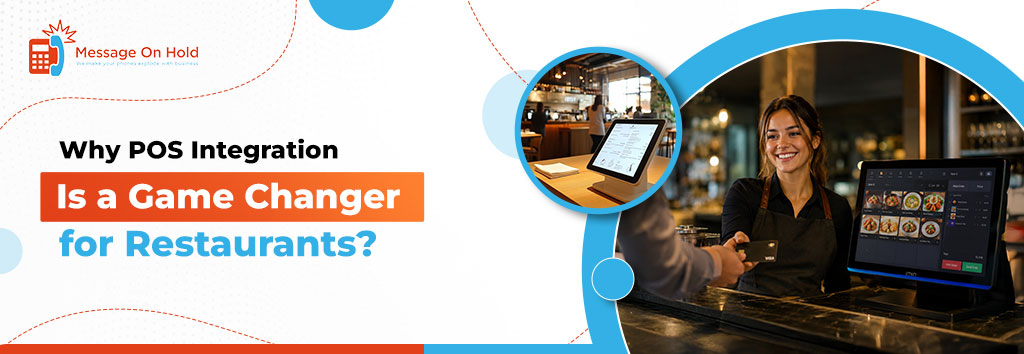
Why POS Integration Is a Game Changer for Restaurants
Upgrading your restaurant’s digital infrastructure can significantly improve both operational efficiency and financial visibility. POS integration is a disruptive solution to reduce manual coordination between disconnected systems. Create a faster and less stressful workplace even during high-volume service hours:
These are how connected marketing automation for restaurants can transform the future of your commercial food operations:
1. Shifting from Chaos to Automated Workflows
Automating your inbound traffic stream changes how your kitchen team handles stressful rushes. A high-performing AI Ordering solution organizes phone and web orders into one synchronized operational queue.
Because every screen reflects the same information, managers can finally stop shouting across the house to confirm order adjustments. An integrated system discipline keeps your ticket production steady. It also cuts down customer wait times and maximizes your daily kitchen capacity.
2. Turning Data Entry Clerks into Hospitality Hosts
Your workers will be able to focus entirely on real customer care after you remove the chore of manual data entry. The front-of-house staff can spend their energy to welcome guests, maintain spotless dining rooms, and suggestively sell high-margin items.
The front counter stress levels reduce considerably as there is no need for repetitive screen typing anymore. Your employees stay energized and attentive, which raises your average table check size and improves the customer experience.
3. Moving from Third-Party Dependency to First-Party Control
Relying entirely on aggregate delivery marketplaces leaves your business vulnerable to steep commissions and lost customer relationships. Having a Customer Engagement & Marketing Automation can connect a modern restaurant POS system directly to branded digital channels and first-party ordering experiences.
You keep 100% of the ticket revenue while gathering valuable email addresses, purchase behaviors, and loyalty insights internally. These customer insights support targeted promotions, repeat ordering campaigns, and stronger long-term relationships.
4. Combining Disconnected Channels into One Dashboard
A unified digital network gives you complete visibility into your true store performance metrics. You no longer need to export data from multiple systems to calculate your daily food and labor costs.
The sales records, platform delivery fees, and phone orders combine into one central point of analysis. Be able to make accurate decisions regarding menu prices, labor scheduling, and weekly ingredient purchases using these clear insights.
5. Building a Protective Barrier Against Staff Burnout
A chaotic work environment drives food service employees away faster than almost any other challenge. Integrated Online Ordering Apps eliminate flashing tablet screens and messy hand-written tickets. Your kitchen turns into a calmer workspace.
The line cooks work with clear, printed instructions, which minimizes friction with your service team. Protecting your crew from avoidable stress keeps morale high and lowers your costly store staffing turnover.
The Core Benefits of POS Integration for Busy Restaurants
Fully integrated core systems eliminate all your front-counter headaches day in and day out. A total synchronized approach is the best way to maintain your bottom line. At the same time, you shorten the amount of time you are spending at the counter.
Here’s how a fully integrated network is a win-win for both your kitchen and the bank:
1. Streamlining Third-Party Delivery Apps Through Your Central System
A delivery app POS integration allows marketplace orders to be automatically fed into your system. During busy periods, it’s less for your staff to navigate and for your kitchen to manage.
2. Connecting Phone Ordering and AI Voice Assistants to Your Kitchen Flow
Using an online ordering POS integration connects phone orders directly with your live restaurant menu. Automated orders go straight to the kitchen staff so that they can concentrate during the dinner rush.
3. Eliminating End-of-Day Bookkeeping Discrepancies and Reconciliation Errors
This is where specialized POS integration software comes into play. The right solution automatically organizes sales, platform fees, and digital tips into accurate financial categories. Your management team has to spend less time troubleshooting spreadsheets and more time managing the restaurants.
4. Ensuring Data Security and Network Reliability with Cloud-Based Platforms
A modern cloud-based restaurant POS protects your customer and business data with the help of secure, encrypted systems. Even during internet outages, kitchens continue processing orders smoothly through reliable offline operational support.
FAQs
1. What is POS integration?
Point Of Sale (POS Integration) connects your POS software with other business apps and channels like delivery apps accounting, and inventory. It enables these systems to replace manual data entry and share data automatically with a centralized hub. This boosts speed and prevents errors.
2. Will setting up a restaurant POS integration disrupt our live service?
No, a POS integration system doesn’t disrupt your business’s live service upon planning properly. The installation and software configuration of happen completely during your closed hours or slow periods. Your live ordering lines stays active with zero service interruptions.
3. Can an integrated POS system handle custom menu item modifications?
Yes, modern integrated POS systems come with specific design to handle custom menu modifications. Your staff can easily add, substitute, or remove ingredients on the fly and automatically adjust pricing for add-ons. They also instantly route these modifications to the kitchen display system or prep printer.
4. Does my business need specialized POS integration software for marketing?
Yes. If your business operates across multiple channels or targeted marketing, POS integration becomes necessary. It helps bridge sales data and marketing systems for better coordination and performance. Without it, you miss automated customer insights and lose personalization opportunities
Find Your Right POS Integration Strategy for Long-Term Operational Growth!
To bring digital harmony to your restaurant floor, you need to move away from isolated, disconnected software setups. Unifying your online ordering, marketplace delivery apps, and inbound phone traffic protects your profit margins and your team’s sanity. That’s what Message On Hold’s strategic Point Of Sale integration does.
We are ready to help you eliminate front-counter clutter and protect your business against costly food waste. From there, we make it easy to automate your customer retention tracking. Let us look at your current register setup together and build a reliable, stress-free ordering system for your team.
Contact us today for a practical workflow review, and we will bring balance back to your kitchen operations.