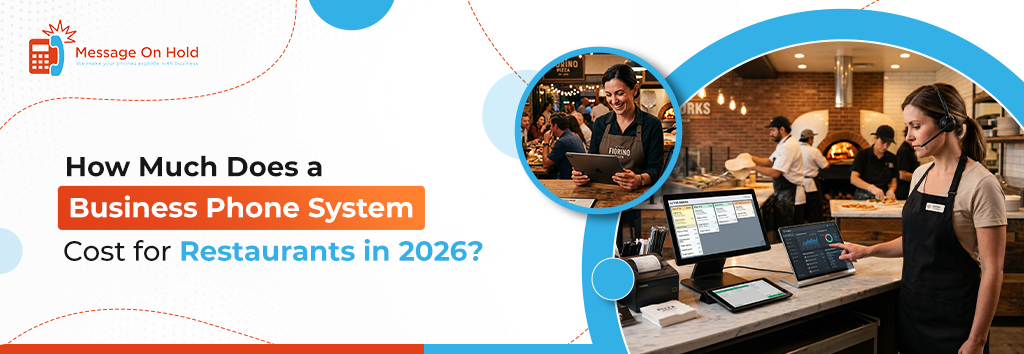
Modern pizzerias and quick-service restaurants cannot afford communication failures even for a moment. Every missed call can mean a lost order and a disappointed customer. To plug this invisible revenue leak, upgrading your standard phone line is a necessity, but it requires clear budgeting.
Enter modern business phone system – an engineered solution to turn an old utility line into a high-yield profit center. But what does it realistically cost to deploy this level of infrastructure? In 2026, pricing of an enterprise calling solution typically ranges from $99 to $600+ per month, per location, depending on your scale, features, and level of automation.
Choosing the cheapest option often creates higher long-term costs through missed sales, manual workflows, and poor customer experiences. Going for a high-end option ensures flawless, automated order handling that completely secures your hard-earned restaurant revenue.
This blog clears away all the confusion by breaking down the costs of different types of business phone systems. We have also explained what influences pricing, the hidden expenses, and how to evaluate the true ROI.
Read it till the end to choose a system that supports profitable, reliable restaurant business phone system options.
Why Restaurant Phone Systems Matter More Than Ever in 2026?
During the past few years, fast-service restaurant communication has changed dramatically. Guests now expect immediate responses, accurate orders, and reliable service every time they call.
Having a strong communication technology like a business phone system can protect revenue, support employees, and create better customer experiences. Below are the reasons why a restaurant calling solution is crucial in 2026:
- Customers Still Prefer Calling Restaurants
Many guests still prefer speaking directly before placing any large orders or requesting custom meals. They also crave a human voice before confirming operating hours.
A dependable business phone number builds confidence, answers questions quickly, and strengthens customer relationships through genuine conversations.
- Every Missed Call Represents Potential Lost Revenue
Every unanswered call creates another opportunity for customers to choose your competitor restaurants instead. Reliable restaurant call management software captures incoming calls efficiently.
It helps you reduce missed calls and restaurant revenue loss while protecting valuable daily sales opportunities.
- Labor Challenges Have Changed Restaurant Communication
Hiring is difficult across many restaurants. This makes efficient communication more valuable than ever before. Modern phone technology handles repetitive customer interactions automatically. Meanwhile, your staff members can concentrate on food preparation, hospitality, and faster in-store service.
What Does a Modern Restaurant Business Phone System Include?
Modern restaurant communication platforms deliver much more than simple voice calling. Today’s solutions combine cloud technology, intelligent automation, operational reporting, and seamless integrations. Together, these improve guest experiences and also reduce daily workloads across every restaurant location.
The top business phone systems comprise these scalable features:
- Cloud-Based VoIP Calling
A high-tech cloud-based VOIP phone system for restaurant operations offers flexible communication without expensive hardware upgrades. With a modern VOIP system for small businesses, you can improve call quality, simplify management, and support diverse restaurant teams.
- AI Call Answering and Order Taking
AI can answer incoming calls consistently. An AI-based phone solution captures customer orders accurately and reduces long customer wait times during peak business hours. Your staff members stay available for dining room service, and automated ordering continues generating restaurant revenue.
- Point of Sale (POS) Integration Capabilities
Business communication system now features direct integration that connects phone orders with your POS platform immediately after customer confirmation. Your kitchen staff will receive accurate menu pricing, inventory updates, and order details quickly without duplicate entry or delays.
- Reporting and Analytics
Contemporary restaurant phone solutions come with detailed reporting and analytics. These data highlight call trends, abandoned conversations, peak ordering periods, and customer behavior across every location.
With actionable insights, you can improve staffing decisions, optimize operations, and identify opportunities before encountering any expensive business challenges.
How Much Do Business Phone Systems Cost for Restaurants?
Vetting providers requires a clear understanding of market tiers to find a configuration matching your operational scale. Avoid generic corporate vendors that utilize confusing per-user pricing setups that artificially inflate your bills.
1. Basic Restaurant Phone Systems
- Typical Range: $15 to $45 per user monthly.
- Best For: Single-location restaurants, independent cafes, and small bakeries.
It’s an entry-level option that relies on standard office phone systems built for traditional corporate environments. You will receive simple cloud dialer apps, basic automated attendants, and digital voicemails.
However, these platforms completely lack deep point-of-sale integrations. They work adequately for small operations with low phone volumes, but they cannot handle intense weekend dining rushes.
2. Mid-Tier Restaurant Communication Systems
- Typical Range: $99 to $250 flat rate monthly per location.
- Best For: Growing restaurants, local pizzerias, and busy casual concepts.
The mid-tier communication system introduces a specialized restaurant VoIP phone system pricing structure. It entirely drops restrictive per-seat licensing fees. You can secure robust multi-line call queues, integrated customer database lookups, and professionally produced on-hold audio marketing channels.
A setup like this manages high call volumes efficiently. Be able to keep your monthly operational expenses entirely stable and highly predictable.
3. Advanced Restaurant Communication Platforms
- Typical Range: $200 to $600 flat rate monthly per location.
- Best For: Multi-location operators, high-volume quick-service chains.
This advanced tier introduces autonomous conversational voice intelligence to process incoming phone orders. It completely eliminates the need for human staff. The advanced solutions function as the best business phone system for heavy delivery concepts by routing clean tickets directly into your kitchen.
You will receive comprehensive system analytics, automated upselling algorithms, and deep integration with your enterprise POS network.
4. Enterprise-Level Restaurant Technology Ecosystems
- Typical Range: Custom contract pricing based on unique technical scope.
- Best For: Franchise groups, national restaurant brands.
Large hospitality organizations often require a powerful, centralized platform to oversee communication infrastructure across distinct geographic regions simultaneously. These premium corporate ecosystems deliver custom API connections, enterprise-grade security compliance, and dedicated network engineers.
Your management team can update entire regional menus instantly from a single centralized digital dashboard. Expect unmatchable brand consistency and efficiency.
Restaurant Communication Pricing Comparison Matrix
| System Tier | Average Monthly Price | Target Audience | Primary Core Features |
| Basic Cloud SaaS | $15 – $45 / per seat | Small neighborhood cafes | Mobile dialer app, basic auto-attendant, standard voicemail boxes |
| Mid-Tier Flat Rate | $99 – $250 / per location | High-volume local pizzerias | Multi-line call queues, custom audio promos, and caller database lookup |
| Advanced AI Automation | $200 – $600 / per location | Fast-casual delivery concepts | 24/7 conversational voice AI ordering, direct kitchen ticket routing |
| Enterprise Network | Custom Contract Quote | National franchise groups | Multi-unit control panels, open API access, dedicated technical supp |
The Hidden Costs Restaurant Owners Often Overlook
When you focus solely on your upfront software subscription fee, it creates a dangerous blind spot in your financial planning. Having outdated or poorly configured setups regularly leaks money through several silent operational avenues. As a result, restaurant margins get severely damaged.
These are the cost factors you often overlook, which run behind the scenes:
- Lost Revenue from Missed Calls
A cheap phone line that flashes a busy signal during peak dinner hours actively surrenders cash to your local competitors.
When lines stay jammed for a few hours each weekend, dozens of hungry customers abandon the call immediately. This uncaptured revenue adds up to thousands of dollars in lost profit margins over the course of a single calendar year.
- Manual Order Entry Labor Costs
An unintegrated phone system for a small restaurant forces your hourly crew to process phone orders manually. Your employees waste valuable hours transcribing items on paper pads and typing them back into separate terminals.
Smart automation tools can eliminate this massive monthly labor expenditure caused by inefficient data replication.
- Order Errors and Customer Recovery Costs
During peak service windows, kitchens are incredibly loud and stressful environments. It makes verbal communication mistakes highly common. Misinterpreting a single ingredient modification leads directly to incorrect food preparation, which in turn compounds your raw ingredient costs.
- Internet Downtime and Communication Failures
Standard cloud networks drop when your local internet service provider experiences an unexpected neighborhood utility outage. A sudden network crash leaves your phone lines dead.
Your online ordering pages drop immediately, and your credit card processing terminals freeze abruptly. A single night of tech downtime can destroy an independent eatery’s net profitability for the month.
- Third-Party Marketplace Dependency
When your house lines remain constantly busy, marketplace apps enjoy that advantage. These aggregate delivery platforms extract punishing commission fees on every transaction. At the same time, it hides your valuable customer data.
You lose direct relationship ownership and surrender massive percentages of your profit to outside corporate aggregators.
Which Factors Influence Restaurant Phone System Pricing?
Your final software invoice rises or falls based on specific operational variables defining your kitchen environment. The moment you align your technology investments directly with your real-world business needs, you can prevent purchasing unnecessary features
These are the aspects that add up to the restaurant phone system pricing:
- Number of Locations
Multi-location restaurant groups usually negotiate lower per-unit pricing than single independent owners, who pay standard rates. But running several properties often calls for centralized management tools. These can raise the base subscription price.
- Call Volume Requirements
High call volume restaurants need multi-line routing to avoid busy signals. Supporting more simultaneous calls demands extra server capacity, and that cost shows up in your monthly maintenance fees.
- AI Ordering Features
AI voice agents cost more monthly than basic phones. On the flip side, they handle calls without tying up staff. It’s worth weighing that higher fee against the labor savings you will actually see.
- POS Integration Requirements
To link your phone system to your POS, you need a robust cloud-based phone system for a restaurant. Some POS vendors charge separate API fees. Yes – the POS integration adds to setup costs upfront, but saves your staff from manually typing in orders.
- Customer Engagement Tools
Some restaurants use management software to text a missed caller an ordering link right away. It can turn a hang-up into a possible sale. Adding these marketing and loyalty features usually bumps you into a higher subscription tier.
Is a More Expensive Restaurant Phone System Actually Worth It?
Wondering whether shifting to a premium solution can pay off?
As the owner of a pizzeria or a quick-service eatery, look past simple price tags to evaluate true ROI.
A cheap, regular phone line that drops customer calls during a hectic weekend rush is actually the most expensive tool you can possess. On the other hand, an extremely expensive solution may introduce unnecessary financial burden.
The best business phone systems belong to an ideal price range of $99-$250 flat rate monthly per location.
Investing in a robust, flat-rate platform with integrated POS syncing and automated call queuing acts as a shield for your revenue. Advanced technology enables your business to capture every single inbound ticket. At the same time, it automatically upsells higher-margin side items and lowers your floor labor costs.
How to Choose the Right Restaurant Phone System in 2026?
- Prioritize Restaurant-Specific Solutions
Generic office phone systems were not built for your weekend rush. You need software that actually understands your business needs.
- Look Beyond Monthly Subscription Costs
While purchasing one, don’t just ask about the monthly price. Ask what’s hiding underneath the cost. Going forward, the wrong selection might make hardware fees, recording costs, and line upgrades add up fast.
- Evaluate Integration Capabilities
If your phones can’t talk to your POS system, you are already stuck typing orders by hand. Well, that’s not an upgrade – that’s just extra work.
- Assess Reliability and Support
When your restaurant phones die at 8 pm on a Saturday, a ticket queue is inevitable. At that time, you need real support. Hence, choose teams that have real people on board who can fix things as soon as they happen.
How Message On Hold Helps Restaurants Modernize Communications With Reliable Business Phone Solutions?
Message On Hold is worth your investment as it focuses on building distinctive restaurant business solutions with unique features. Each of these tools protects independent restaurant profitability and workflows.
Our team rejects generic corporate office software models to deliver a suite of high-performing solutions that modernize restaurant communications:
- VOIP Phone Systems
We deliver robust, crystal-clear VOIP phone system infrastructure specifically for the hospitality industry. Our platform manages intense restaurant call volumes without dropped lines or frustrating busy signals.
- 24/7 AI Ordering
Our conversational AI-ordering system answers incoming phone calls instantly to handle entire food orders. The automated system processes menu modifications and sends tickets directly into your POS.
- Wireless Failover Protection
Our hardware packages blend automated cellular backup devices. During network crashes, they get activated instantly. Such infrastructure keeps your telephone lines and card processing live.
- Online Ordering Integration
We seamlessly bridge your incoming voice channels with your native, commission-free web portals. A direct digital link maximizes your profit margins and bypasses expensive third-party marketplace fees.
- Customer Engagement Automation
Our system turns dead hold time into an active marketing channel using custom scripts. We help you highlight high-margin packages and specials, while automated text-back links recover lost callers.
FAQs
1.How much does a VoIP phone system cost for a restaurant?
A professional, restaurant-specific VOIP solution setup typically averages between $99 and $250 monthly per location. The flat-rate model provides multi-line queues and helps you get rid of hidden per-user license fees.
2. Are AI phone ordering systems worth the investment?
Yes, modern automated voice channels pay for themselves quickly as they capture every inbound order. They drive up check sizes through consistent algorithmic upselling and reduce your floor labor expenses.
3. Can a restaurant phone system integrate with my POS?
Top-tier hospitality phone systems offer deep, native integration with major POS platforms. In this way, your automated voice orders can route directly into your kitchen display setup.
4. What is the biggest communication mistake restaurants make?
The most expensive error is utilizing single-line setups that flash busy signals to customers during peak rush hours. It’s an epitome of operational failure that drives diners directly to high-commission aggregate apps.
Invest In The Right Phone System With Message On Hold
At Message On Hold, we understand that your telephone lines function as a critical lifeline for your direct revenue. Relying on outdated analog hardware or restrictive corporate per-user software subscriptions quietly leaks valuable profit margins.
Our flat-rate restaurant communication platforms are purpose-built to stop this financial drain. From a basic monthly overhead expense into an active, highly predictable profit engine – we transform your telecom setup.
Connect with our engineering team today to book your custom operational audit and claim a 60-day risk-free trial.